 The Deli
Paper
The Deli
Paper
Sorry, but nothing matched your search terms. Please try again with some different keywords.
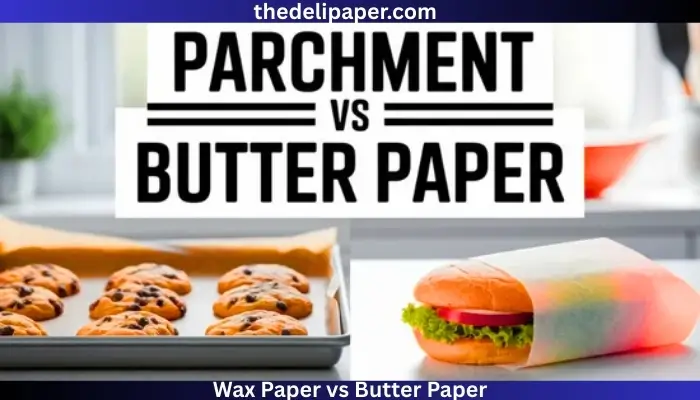
In bakeries, kitchens, restaurants and food preparation areas Paper products play an unnoticed but crucial function. The most frequently used choices are butter and wax paper. On first inspection, these two papers could appear identical in terms of texture, color and the thickness. But their quality, performance and purpose of use differ greatly. Making the wrong choice could result in inadequate outcomes, food safety concerns or waste that is not needed. Knowing the distinction between butter and wax paper can improve the quality of food and efficiency. It also increases confidence in everyday activities.
Difference between butter and wax paper in depth, describing the processes involved in making each as well as the best place to be employed, and which is ideal for various requirements in kitchen and food service.
Wax Paper is a product that has been coated by the small amount of wax typically across both surfaces. The wax coating makes an unsticky and water-resistant surface. Due to this coating, wax paper is ideal to handle food that does not require heating.
The main function for wax papers is protecting and separation. It keeps food items from sticking together, and assists in containing moisture for short time periods. It is commonly used in kitchens and food preparation areas due to the fact that it is inexpensive, simple to work with, and is effective for tasks that are simple.
But, wax paper does have one major drawback. The wax coating isn't intended to stand up to high temperatures. If exposed to heat the wax could burn, melt or spread onto food items. This is why wax paper should not be employed in ovens, on stoves, or around open flames.
Wax paper is ideal for applications that require room temperature or cold temperatures. It is commonly used in kitchens of homes and food service facilities in commercial settings for jobs that do not require cooking.
The most common uses include:
Wax paper is extremely useful when food items need to be easily and efficiently. The non-stick surface protects food from sticking or tearing when wrapping or storing.
Despite its ease of use it isn't an all-purpose solution. Its inability to resist heat is why it is not suitable for cooking or baking. Utilizing wax paper at high temperatures may result in safety issues and impact food quality.
The main limitations are:
Due to these limitations wax paper is best used only for handling cold food and other preparation tasks.
Butter paper, often called parchment paper, is made for use in heat-based applications. In contrast to wax paper, butter papers are treated with a specific process that grants it resistance to heat and grease resistance. Additionally, it has an unnaturally non-stick surface.
Butter paper is extensively employed in cooking and baking because it is able to withstand extreme temperatures without igniting or emitting harmful substances. It forms a protective layer between cookware and food which makes cleanup simpler and increases the quality of cooking.
This paper is used in professional kitchens as well as bakeries where consistency in outcomes and safety of food are crucial.
Butter paper is flexible and is suitable for cold and hot applications however, it is sought-after for its performance when under the heat.
Common uses are:
Since butter paper smothers grease well, it can help keep food's texture and appearance when cooking. It also enables bakeware to be removed quickly from the tray without additional oils.
Butter paper has many benefits that makes it a necessity for food preparation using heat. Its performance at temperatures and pressure makes it stand out from other types of paper.
Some of the advantages are:
The benefits of butter paper make it the preferred option for baking professionals as well as home cooks as well.
While butter and wax paper might look alike but their main differences are in their coatings and resistance to heat. Knowing these differences will help ensure the proper use.
Feature Wax Paper Butter Paper
Resistance to heat Not safe for heating. Heat-safe
Oven use No Yes
Coating Wax The fibers are treated or made of silicon.
Resistance to grease Moderate High
Best use Food that is cold, wrapped in Baking and cooking
This table clearly shows the reasons why each paper has distinct purposes despite the apparent similarities.
The choice of the right paper is dependent completely on how it is going to be employed. There isn't one type of paper that will work for all situations. The most important factor to take into consideration is the heat exposure.
If your task is baking or roasting, or cooking then butter paper is the best option. It is safe, enhances outcomes, and avoids sticking. If the job involves wrapping or storing food items without heating it is much more efficient and economical.
The right paper can reduce food waste, enhances the quality of food and aids in efficient kitchen workflows.
In bakeries, using butter paper is crucial to ensure consistency in baking. Cakes or cookies, as well as pastries benefit from uniform heating and easy removal from the trays. Butter paper can also help maintain the baking surfaces clean, thereby saving time when cleaning.
Wax paper is, however, typically used following baking. It's useful for wrapping baking goods after cooling, in separating layers of pastry or for lining display trays. Each paper plays a specific purpose at different phases of production.
Cafes can benefit from both of these papers. Butter paper helps bake menu items, and wax paper aids in wraps for sandwiches and takeaway packaging.
Restaurants depend on efficiency and security. Butter paper is typically employed for dishes that are oven-based and plating presentations when there is heat. It is also used under food items to remove the grease and maintain its appearance.
The paper of wax is commonly used to wrap burgers, sandwiches, quick-service, and other products. The non-stick surface makes it simple to use in busy times of service.
Making sure that each paper is used correctly can help restaurants to maintain efficiency, cleanliness and quality that is consistent.
Food safety is an important issue in every kitchen. Incorrectly using paper products could expose you to dangers. It is not recommended to expose wax paper placed in direct contact with high temperatures since melted wax may be harmful to food items. Butter paper is made to be safe for food in the presence of heat, making it a safer choice to cook with.
Make sure that all paper products are clearly labeled to be used for the purpose they were designed. The proper use of guidelines will protect the staff and customers.
Paper products are usually chosen because of their ease of use; however, responsible use is important. Butter paper is usually more durable, and may be used again for baking tasks. The wax paper is single-use and is ideal for temporary applications.
The first step to reduce waste is selecting the right paper for the task. Effective use helps control costs and helps improve management of resources.
From a cost standpoint from a cost perspective, wax paper is typically less expensive in comparison to butter paper. However, using the wax paper incorrectly could lead to food loss, damaged products or safety concerns. It may cost more initially, but it will deliver superior results when used in applications that require heat.
A balance of cost and function ensures long-term effectiveness in kitchens and food companies.
Many people use the wrong wax paper in ovens due to the fact that it resembles butter paper. This is among the most frequently made kitchen mistakes.
Avoiding these mistakes:
By avoiding these mistakes, you can keep food safe and fresh.
Butter paper and wax paper are both excellent tools when properly used. Their differences aren't just related to safety, but also practical. Wax paper is a great choice for the handling of food items, cold packaging, handling, and separation. Butter paper is crucial to bake, roast and cook over heat.
Understanding the differences between butter and wax paper will allow bakeries, kitchens or restaurants as well as home cooks to work efficiently and effectively. Selecting the appropriate paper for the job enhances the results, decreases the amount of waste and helps improve methods of food preparation.
For inquiries and wholesale orders Contact us directly at 832-900-9245
Contact Mail: sales@thedelipaper.com
Does wax paper have the same qualities as butter paper?
No. Wax paper is meant for cold foods, whereas butter paper is resistant to heat for baking.
Does wax paper work into the oven?
No. Wax paper may be melted or ignited when heated to high temperatures.
Is butter paper safe for baking?
Yes. Butter paper is specifically designed to bake and use in the oven.
What do you use wax paper to do?
Wrapping sandwiches, cheese and cold food items.
Do you think butter paper can wrap food?
Yes yes, especially baked or oily food items.
Which is the better choice to cook with?
The butter paper can be the ideal option to cook with.
October 20, 2026
October 16, 2026
October 13, 2026
September 25, 2026
September 18, 2026